
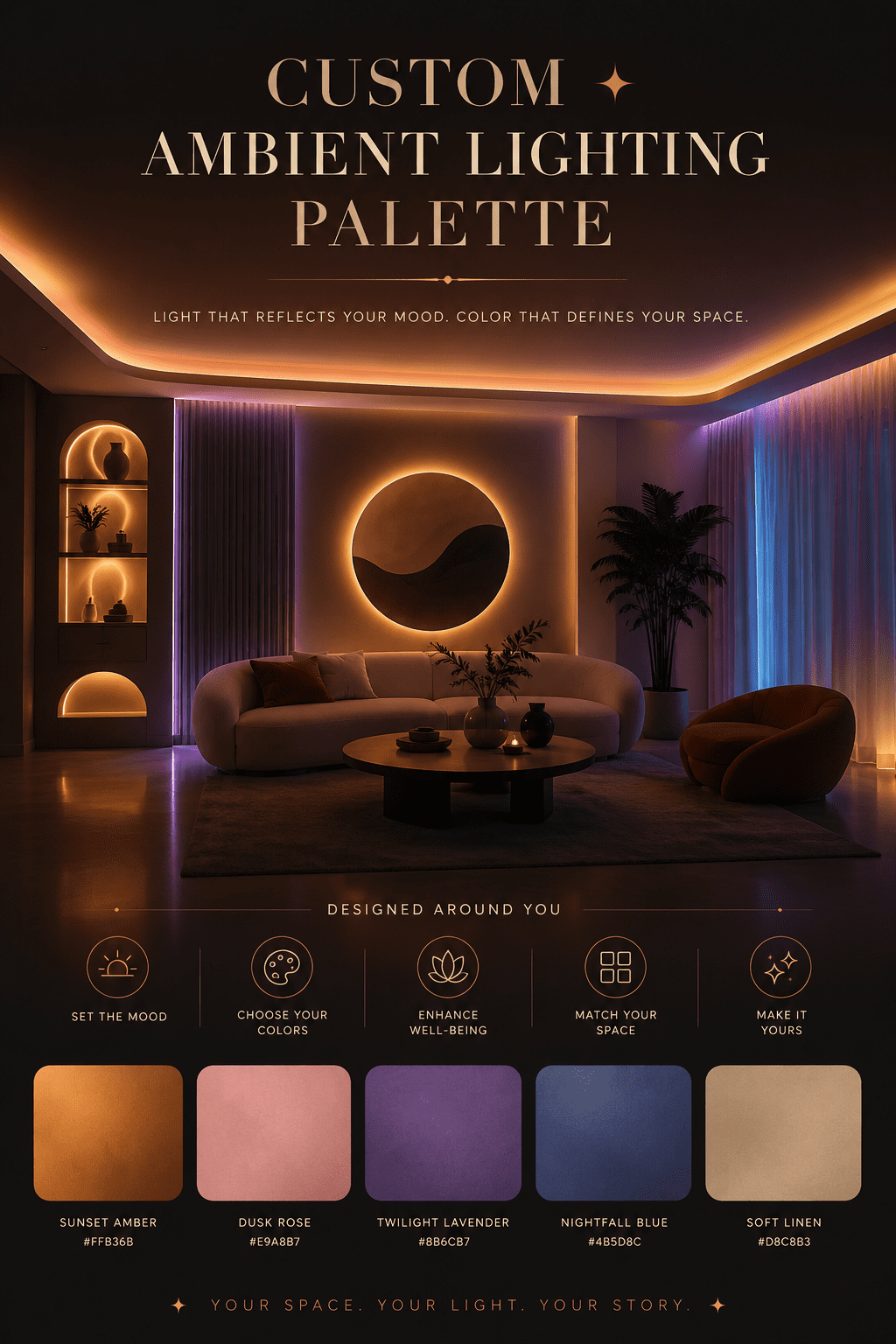
Creating the perfect atmosphere at home starts with choosing the right custom ambient lighting palette. Lighting has evolved far beyond basic functionality. Today, homeowners use layered illumination, smart LEDs, warm tones, and color-coordinated fixtures to create cozy, luxurious, and visually stunning interiors. Whether you want a relaxing bedroom retreat, a sophisticated living room, or a modern gaming setup, a thoughtfully designed ambient lighting palette transforms the entire mood of your space.
In this complete guide, you’ll learn how to design a custom ambient lighting palette for every room, explore trending color combinations, understand lighting temperatures, and discover expert styling ideas that elevate your home. Discover how to create a palette that complements your personal aesthetic and interior décor theme.
- What Is a Custom Ambient Lighting Palette?
- Why Ambient Lighting Matters in Interior Design
- Best Custom Ambient Lighting Palette Ideas
- How to Build a Custom Ambient Lighting Palette
- Best Rooms for Custom Ambient Lighting
- Smart Lighting and Automation
- Trending Ambient Lighting Ideas for 2026
- Common Ambient Lighting Mistakes to Avoid
- Best Materials for Ambient Lighting Fixtures
- Budget-Friendly Custom Ambient Lighting Ideas
- Pinterest-Inspired Ambient Lighting Aesthetics
- How Lighting Affects Mood
- Sustainable Ambient Lighting Options
- Professional Interior Designer Tips
- Frequently Asked Questions (FAQs)
What Is a Custom Ambient Lighting Palette?
A custom ambient lighting palette refers to a carefully selected combination of lighting colors, brightness levels, fixture styles, and layered illumination designed to match your interior décor. Unlike traditional overhead lighting, ambient lighting focuses on creating mood, depth, warmth, and visual harmony throughout a room. A customized palette allows homeowners to personalize the emotional experience of their space.
Popular ambient lighting elements include:
Why Ambient Lighting Matters in Interior Design
Lighting is one of the most powerful elements in home décor. It influences mood, productivity, comfort, and even perceived room size. Designing a custom palette offers many key benefits:
- Creates Emotional Atmosphere: Soft warm lighting creates calmness, while cooler tones improve focus and energy.
- Enhances Interior Design: Highlights textures, furniture, artwork, and architectural features.
- Improves Comfort: Balanced ambient lighting reduces harsh shadows and eye strain.
- Adds Luxury Appeal: Layered lighting instantly makes any room feel more expensive and professionally designed.
- Increases Functionality: Smart systems allow you to customize scenes for reading, dining, or relaxing.
Best Custom Ambient Lighting Palette Ideas
Below are the most popular and stylish ambient lighting palettes trending in modern home décor. Choose the look that fits your aesthetic:
Warm Minimalist Palette
Focuses on neutral tones, soft whites, and subtle warmth. Best for Scandinavian living rooms, Japandi interiors, and minimalist bedrooms. Use paper lantern pendants, warm LED strips, and matte floor lamps.
Modern RGB Ambient Lighting Palette
RGB lighting is no longer limited to gaming rooms. Modern interiors integrate subtle RGB accents behind furniture, televisions, or floating shelves for a sophisticated, futuristic look.
Earth-Tone Ambient Lighting Palette
Creates cozy, grounded interiors using nature-inspired colors. Perfect for boho, rustic, and organic modern spaces. We recommend pairing these colors with rattan lamps, linen shades, and wooden fixtures.
“A custom ambient lighting palette is the DNA of a room’s atmosphere—it controls how we feel, interact, and relax within our personal sanctuaries.”
Soft Pastel Lighting Palette
Soft pastel ambient lighting adds creativity and playfulness to spaces like teen bedrooms, beauty rooms, and modern apartments. Combine lavender, peach, soft pink, and baby blue lighting with white furniture and reflective surfaces.
How to Build a Custom Ambient Lighting Palette
Designing the perfect ambient lighting setup requires a structured strategy to ensure colors, fixtures, and styles coordinate seamlessly.
Step 1: Identify Your Interior Style
Choose a lighting palette that coordinates with your existing interior design theme. Refer to this style pairing guide:
| Interior Style | Recommended Lighting Palette |
|---|---|
| Scandinavian | Warm white + beige |
| Industrial | Amber + matte black |
| Modern Luxury | Gold + warm white |
| Boho | Terracotta + soft amber |
| Contemporary | RGB accents + neutral white |
Step 2: Understand Color Temperature
Select color temperatures carefully based on room functions: Warm White (2700K–3000K) is cozy and relaxing, best for bedrooms and living rooms. Neutral White (3500K–4100K) is balanced and functional, best for kitchens. Cool White (5000K–6500K) is bright and energizing, best for task-oriented spaces.
Always combine **Ambient Lighting** (general light), **Task Lighting** (reading or cooking light), and **Accent Lighting** (design accents) to create visual balance and eliminate clinical glare.
Best Rooms for Custom Ambient Lighting
Every room benefits from customized lighting. Here is how to implement lighting palettes room-by-room:

Living Room & Bedroom
The living room benefits most from layered ambient lights. Install LED strips behind your TV media center, add warm floor lamps, and use dimmable ceiling lights. For the bedroom, prioritize relaxation with warm bedside table lamps, under-bed LED strip channels, and smart dimmable bulbs in warm white or soft amber.
Kitchen & Bathroom
In the kitchen, use under-cabinet LED strips, pendant island lighting, and toe-kick illumination in neutral white tones. In bathrooms, spa-inspired backlit mirrors, soft vanity lighting, and hidden ceiling LEDs create a relaxing retreat.


Smart Lighting and Automation
Smart home lighting systems allow you to fully customize and control your ambient lighting palettes. Enjoy the convenience of **Voice Control** via Alexa or Google Assistant, schedule automated **Evening Scenes** to dim lights slowly before bedtime, save **Custom Color Presets** for different moods, and benefit from the energy efficiency of LED smart bulbs.
Trending Ambient Lighting Ideas for 2026
Interior lighting design in 2026 is moving toward organic materials, hidden channels, and wellness: **Invisible Lighting** (LEDs hidden in wall panel moldings), **Organic Lighting Shapes** (curved, sculptural pendants), **Nature-Inspired Sunset Glows**, and **Circadian Adaptive Systems** that change temperature based on daylight patterns.
Common Ambient Lighting Mistakes to Avoid
Keep your home lighting layout functional by avoiding these typical errors:
-
Using Only Overhead Lighting: A single ceiling light source creates flat, sterile interiors and harsh shadows. Always layer fixtures.
-
Mixing Temperatures Inconsistently: Combining cool white and warm yellow lights randomly in the same view feels visually chaotic and uncomfortable.
-
Overusing Saturated RGB Light: Saturated, bright primary colors can overwhelm a room. Use RGB colors subtly as indirect highlights.
-
Ignoring Dimmers: Dimmers are essential for adjusting brightness to match the time of day and activity.
Best Materials for Ambient Lighting Fixtures
The material of your light fixture influences how light is diffused and coordinates with your home’s aesthetic. Choose glass for an elegant, reflective look, linen to soften light beautifully, wood and rattan for warm, organic textures, or metal for a sleek modern finish.
Budget-Friendly Custom Ambient Lighting Ideas
Creating a premium look does not require a large budget. Install inexpensive LED strip lights behind headboards or floating shelves, use plug-in wall sconces to avoid wiring costs, swap standard bulbs for affordable smart bulbs, or place battery-operated puck lights under kitchen cabinets for instant task lighting.
Pinterest-Inspired Ambient Lighting Aesthetics
Pinterest shapes how we view home design. Popular ambient lighting aesthetics to pin and recreate include **Cozy Apartment Lighting** (warm floor lamps and plants), **Moody Dark Academia** (warm amber study lighting), **Scandinavian Hygge Warmth**, and **Soft Girl Pastel Bedrooms** styled with lavender and pink hues.
How Lighting Affects Mood
Scientific studies show that lighting color temperature has a massive impact on your wellness and sleep cycles:
• **Warm Lighting:** Lowers stress levels, encourages relaxation, and triggers melatonin production for better sleep.
• **Cool Lighting:** Increases alertness, supports focus, and boosts daytime productivity.
Sustainable Ambient Lighting Options
Eco-conscious homeowners should prioritize energy-efficient lighting designs. Swap old bulbs for long-lasting LEDs, use smart energy-saving timers, integrate solar-powered accent fixtures, and choose light fixtures crafted from recycled or organic materials.
Professional Interior Designer Tips
To style like a pro, use three to five layered light sources per room to create depth. Use hidden LEDs to highlight architectural features like floating steps or tray ceilings, always choose warm white tones for comfort, and separate your lighting into distinct zones for entertainment, task work, and relaxation.
Frequently Asked Questions About Custom Ambient Lighting Palettes
What is the best color for ambient lighting?
Warm white lighting between 2700K and 3000K is generally considered best for creating cozy and inviting living rooms, bedrooms, and dining spaces.
How do I create a luxury ambient lighting setup?
Use layered lighting (combining ambient, task, and accent sources), warm dimmable LEDs, indirect cove lighting, and decorative brass or glass fixtures.
Are RGB lights good for home décor?
Yes. When used subtly (such as indirect backlighting behind media centers, bookshelves, or floating panels), RGB lighting can enhance modern spaces and create dynamic ambiance.
How many light sources should a room have?
Interior designers typically recommend at least three layered light sources per room (e.g., overhead general light, a floor lamp, and wall sconces) for balanced illumination.