
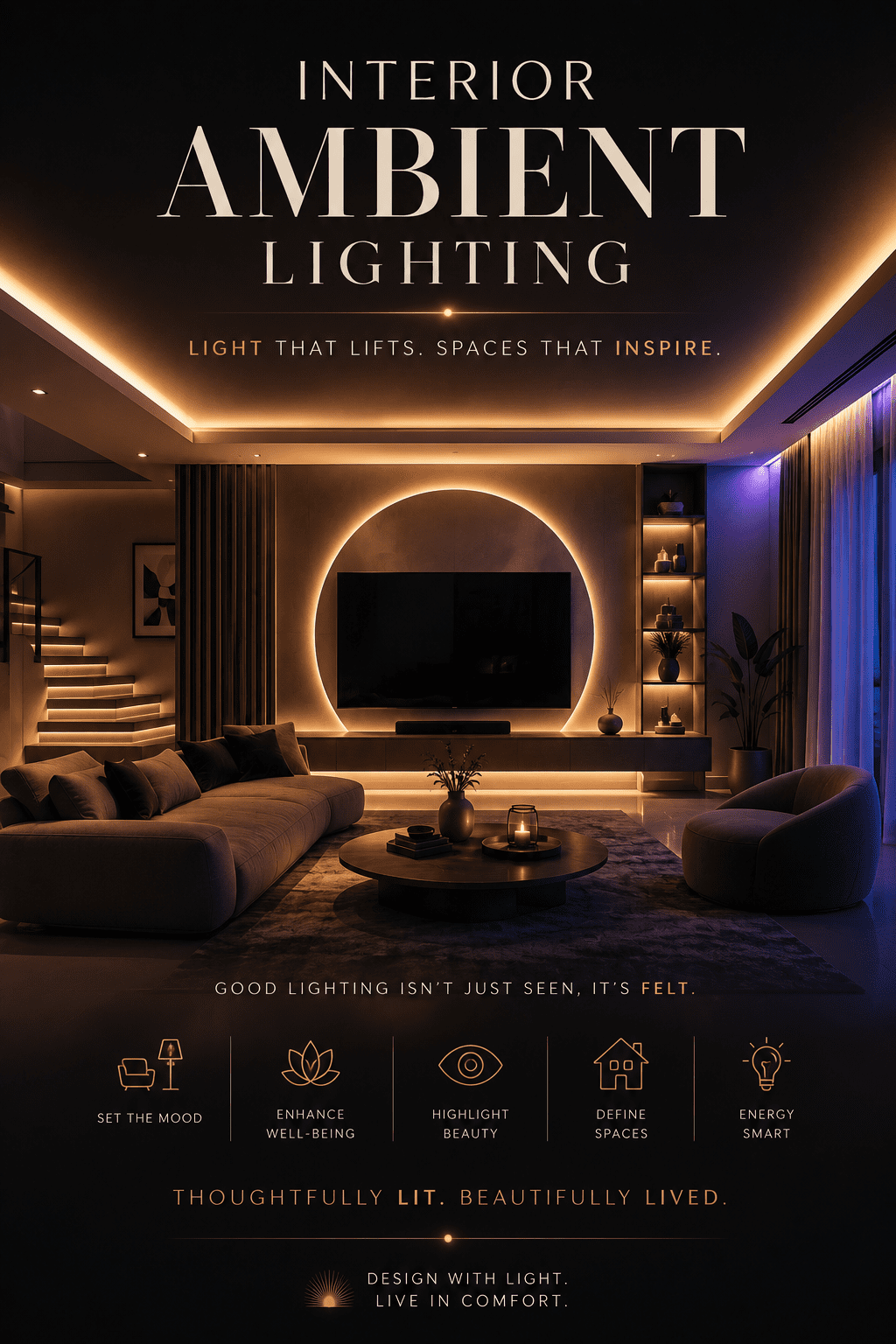
Interior ambient lighting is one of the most important elements in modern home décor. It shapes the mood of a room, enhances comfort, highlights architectural features, and creates a welcoming atmosphere for family and guests. Whether you are redesigning your living room, upgrading your bedroom, or planning a luxury home interior, understanding ambient lighting can transform your space completely.
In this complete guide, you will learn everything about interior ambient lighting. We explore core design principles, fixture types, room-by-room ideas, modern trends, smart lighting solutions, and expert tips for creating a perfectly balanced, beautiful home environment that feels both inviting and functional.
- What Is Interior Ambient Lighting?
- Benefits of Interior Ambient Lighting
- Types of Interior Ambient Lighting
- Interior Ambient Lighting by Room
- Modern Trends in Interior Ambient Lighting
- How to Choose the Best Ambient Lighting
- Common Interior Ambient Lighting Mistakes
- Best Materials and Finishes for Fixtures
- Smart Interior Ambient Lighting Ideas
- Luxury Interior Ambient Lighting Concepts
- Budget-Friendly Ambient Lighting Tips
- Best Interior Styles for Ambient Lighting
- Interior Ambient Lighting for Small Spaces
- The Psychology of Ambient Lighting
- The Future of Interior Ambient Lighting
What Is Interior Ambient Lighting?
Interior ambient lighting refers to the general, foundational illumination of a room. It provides overall brightness and creates a comfortable level of visibility without glare. Unlike task lighting, which focuses on illuminating specific activities like reading or cooking, ambient lighting fills the entire space with soft, even, and diffused light.
Ambient lighting is the foundation of any successful lighting design, establishing the overall mood, warmth, and visual boundary of a room. Key characteristics include:
Benefits of Interior Ambient Lighting
Good ambient lighting can completely change how a home feels. Poor lighting makes interiors look flat, cramped, or uncomfortably sterile, while proper design choices create a relaxing and luxurious sanctuary.
- Enhances Mood: Warm ambient lighting promotes immediate relaxation and emotional comfort.
- Improves Design: Properly illuminates furniture, wall colors, textures, and architectural details.
- Increases Functionality: Ensures the home is safe and easy to navigate at night.
- Reduces Eye Strain: Soft, balanced lighting reduces harsh contrasts and visual fatigue.
- Adds Luxury Appeal: Modern ambient lighting fixtures and cove designs instantly elevate home sophistication.
Types of Interior Ambient Lighting
Understanding the different fixtures and illumination methods helps you create a layered and visually interesting interior layout:
Ceiling Lights
Ceiling-mounted fixtures are the most common source of general ambient lighting. They distribute light evenly across the room and often serve as decorative focal points. Options include flush mount lights, semi-flush ceiling fixtures, chandeliers, and pendant lights.
“Lighting is the unsung hero of interior design; it is the brush that paints a room with warmth, depth, and luxury.”
Recessed Lighting
Installed directly inside the ceiling for a clean, minimalist, and modern appearance. Recessed lights provide exceptionally even illumination and are widely used in kitchens, hallways, bathrooms, and modern living spaces.
Cove & Architectural Lighting
Uses hidden LED strip lighting placed inside ceiling drop-downs, wall niches, or architectural recesses. This style creates indirect, bounced illumination that feels incredibly soft, dramatic, and luxurious. Perfect for modern bedrooms, home theaters, and hotel-inspired designs.
Wall Sconces
Wall-mounted fixtures provide both decorative interest and soft ambient lighting. They add depth and dimension to walls, making them ideal for hallways, dining rooms, bedrooms, and entryways.
Floor and Table Lamps
Portable decorative lamps are essential for creating cozy, localized lighting zones. Arc floor lamps, Scandinavian paper lamps, and minimalist task-ambient lights help layer the room’s atmosphere.
Interior Ambient Lighting by Room
Different spaces in your home serve different functions, meaning they require tailored color temperatures and fixture layouts:

Living Room
The living room requires maximum flexibility. Layer your lighting sources by combining ceiling fixtures with floor lamps, wall sconces, and LED accent lights. Always use warm white bulbs (2700K–3000K) to encourage relaxation, and add smart dimmers to adjust brightness for movie nights or entertaining.
Bedroom
Bedrooms should feel peaceful and restful. Avoid harsh overhead fixtures directly over the bed. Instead, use soft indirect cove lighting, warm bedside table lamps, and hidden LED strip lighting behind the headboard to create a luxury hotel look.
Kitchen & Dining Room
Kitchens require a balance of ambient and task lighting. Combine recessed ceiling lights with pendant lights over islands and under-cabinet LED strips. For dining spaces, hang a statement chandelier directly over the center of the table and install dimmers to adjust the mood for intimate dinners.
Bathroom
Bathrooms need clean, soft lighting that feels relaxing yet practical. Use vanity light bars, ceiling recessed lights, LED-backlit mirrors, and waterproof accent lights in the shower to create a spa-like feel.


Modern Trends in Interior Ambient Lighting
Lighting trends continue to evolve with technology and design innovation. Key trends defining modern homes include:
- Smart Lighting Systems: Voice control, mobile app operation, brightness adjustment, color customization, and automated circadian schedules compatible with brands like Philips Hue, Govee, Nanoleaf, and LIFX.
- Minimalist Lighting: Thin LED profiles, hidden channel lighting, neutral finishes, and geometric shapes that disappear into the architecture.
- Sustainable Lighting: Energy-efficient LED bulbs, solar-integrated indoor lighting, and smart energy-saving scheduling.
- Biophilic Lighting Design: Integrating natural daylight, organic light-fixture materials (like bamboo and paper), and nature-inspired lighting tones.
How to Choose the Best Ambient Lighting
Selecting the right ambient lighting requires careful planning based on room size, purpose, and aesthetic goals:
1. **Warm White (2700K–3000K):** Best for bedrooms, living rooms, and dining areas to create a cozy, relaxing ambiance.
2. **Neutral White (3500K–4100K):** Best for kitchens, bathrooms, laundry rooms, and home offices to support focus and visibility.
Always consider room size: large spaces require stronger or multiple light sources, while small rooms benefit from softer, layered lighting. Install dimmers on every circuit possible to change the atmosphere instantly.
Common Interior Ambient Lighting Mistakes to Avoid
Avoid these typical design errors to ensure your lighting layout is successful:
-
Using Only One Ceiling Fixture: A single, centered ceiling fixture creates flat, boring spaces with harsh shadows. Always layer your light sources.
-
Choosing the Wrong Bulb Temperature: Using cool white bulbs in a cozy living room or bedroom can make the space feel cold, clinical, and uninviting.
-
Ignoring Natural Light: Failing to integrate natural daylight with your artificial lighting leads to dark, gloomy rooms during the afternoon.
-
Overlighting a Space: Too much brightness can feel overwhelming and hospital-like. Choose softer bulbs and rely on dimmers.
Best Materials and Finishes for Lighting Fixtures
Your lighting fixtures are key decorative elements in your room. Choose finishes that complement your interior design style:
Smart Interior Ambient Lighting Ideas
Smart home technology offers incredible convenience and mood control. Use **Motion Sensor Lighting** in hallways and bathrooms for automated nighttime navigation. Incorporate **Voice-Controlled Lighting** compatible with Alexa, Google Assistant, or Apple HomeKit. Finally, use **RGB Ambient Lighting** color-changing LED strips to customize moods for gaming rooms, home theaters, and modern apartments.
Luxury Interior Ambient Lighting Concepts
Luxury interior designers use advanced architectural lighting layouts to elevate spaces. Create **Hotel-Inspired Lighting** using hidden LEDs behind headboards and under furniture plinths. Utilize **Architectural Lighting** built directly into wall panels, ceiling trays, and staircase treads. Finally, use **Floating Ceiling Lighting** by installing LED strips around the perimeter of a recessed ceiling tray to create a floating visual effect.
Budget-Friendly Ambient Lighting Tips
Upgrading your home’s lighting does not require a large budget. Replace old incandescent bulbs with energy-efficient warm LED bulbs. Add peel-and-stick LED strip lights behind TVs, inside bookcases, or under cabinets. Use decorative floor and table lamps to add warm focal points, and install affordable smart bulbs in existing lamps to get premium dimming and color control.
Best Interior Styles for Ambient Lighting
Different design styles treat ambient lighting in unique ways:
- Scandinavian Style: Soft warm lighting, simple minimalist fixtures, paper lanterns, and cozy hygge atmospheres.
- Industrial Style: Matte black metal fixtures, exposed Edison bulbs, copper detailing, and factory-style cage pendants.
- Modern Minimalist: Hidden LED channels, clean architectural lines, recessed spotlights, and neutral tones.
- Luxury Contemporary: Statement crystal chandeliers, architectural cove lighting, floating ceilings, and custom LED walls.
Interior Ambient Lighting for Small Spaces
Small apartments and compact rooms need smart lighting solutions to feel open and bright. Hang wall mirrors opposite windows to reflect natural light. Choose wall sconces instead of floor lamps to save floor space, install recessed lighting to keep low ceilings visually clean, and paint walls in light colors to improve light reflection.
The Psychology of Ambient Lighting
Lighting temperatures and brightness levels directly affect our mood, sleep cycles, and focus. Warm white light (2700K) supports melatonin production, helping us wind down, relax, and feel calm. Cool white light (4000K+) stimulates focus, alertness, and productivity, which is why it is preferred in work environments.
The Future of Interior Ambient Lighting
The future of lighting combines technology, personalization, and sustainability. Emerging trends include AI-controlled lighting systems that adjust based on your daily routines, circadian rhythm lighting that mimics natural sunlight cycles throughout the day, and invisible architectural lighting integrated directly into wall panels.
Frequently Asked Questions About Ambient Lighting
What is interior ambient lighting?
Interior ambient lighting is the general, primary illumination of a room. It provides overall brightness and soft, diffused light, establishing a comfortable level of visibility without harsh glare.
How do you choose the right light color temperature?
Choose Warm White (2700K–3000K) for cozy spaces like bedrooms and living rooms. Opt for Neutral White (3500K–4100K) for task-oriented rooms like kitchens, bathrooms, and home offices.
What is layered lighting in interior design?
Layered lighting combines three types of illumination: Ambient (general light), Task (focused light for activities like reading), and Accent (highlighting specific design features) to create depth and dimension.
How can I upgrade my lighting on a budget?
Swap old bulbs for warm LED bulbs, install peel-and-stick LED strip lighting under cabinets or behind TVs, add decorative floor lamps, or use affordable smart bulbs for premium control.