
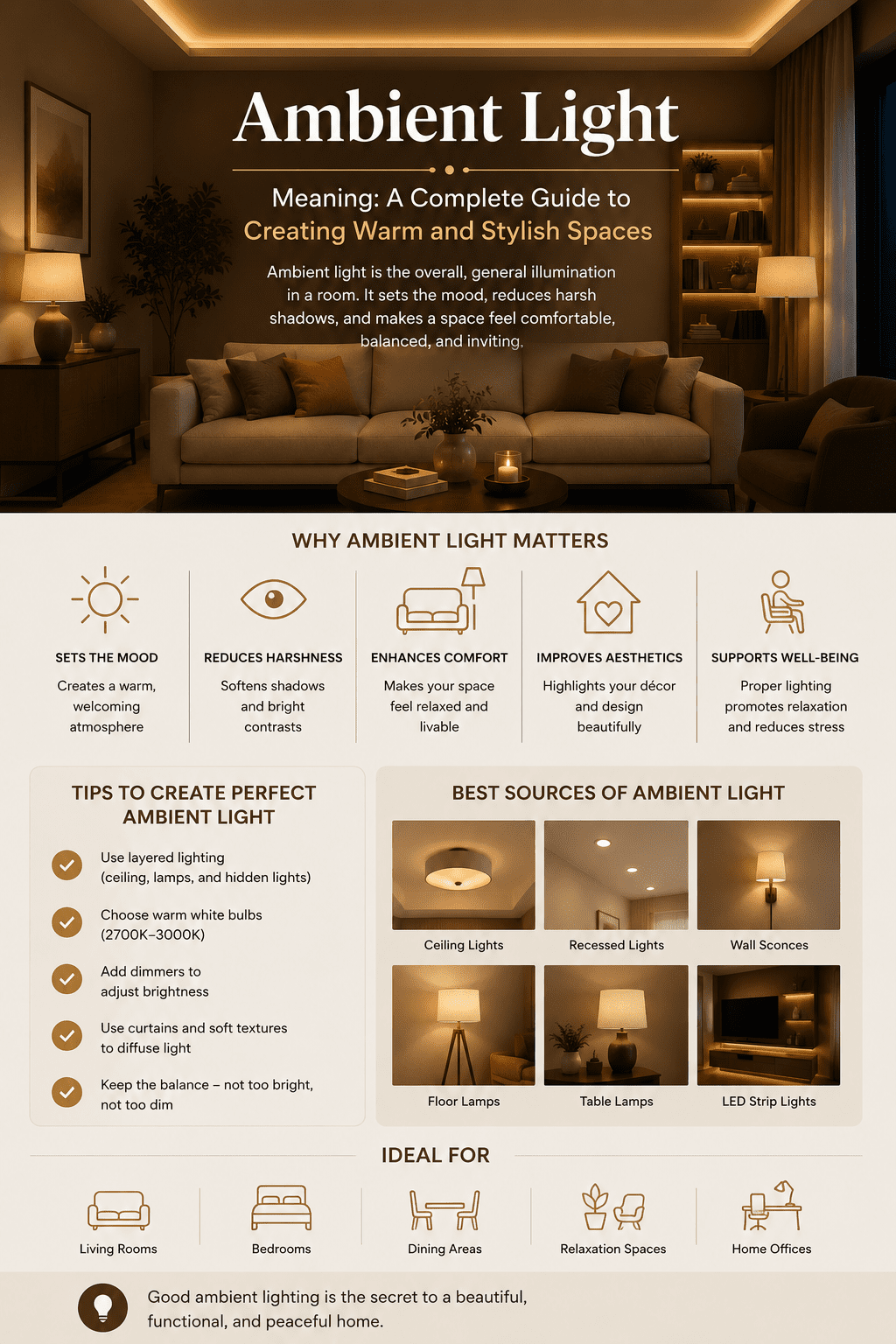
Ambient lighting is one of the most important elements in interior design. It sets the mood, improves comfort, and transforms a house into a welcoming home. Whether you are decorating a bedroom, living room, office, or dining space, understanding the ambient light meaning can help you create a balanced and visually appealing environment.
In modern home décor, ambient lighting is more than just a practical necessity. It has become a key design feature that influences how a room feels and functions. From soft ceiling lights to warm LED strips and elegant floor lamps, ambient lighting creates the foundation of every well-designed interior.
- What Does Ambient Light Mean?
- Why Ambient Lighting Matters in Home Décor
- Types of Ambient Lighting
- Ambient Lighting vs Task Lighting vs Accent Lighting
- Best Color Temperature for Ambient Lighting
- How to Use Ambient Lighting in Different Rooms
- Trending Ambient Lighting Ideas in 2026
- How to Choose the Right Ambient Lighting
- Benefits of LED Ambient Lighting
- Common Ambient Lighting Mistakes to Avoid
- How Ambient Lighting Affects Mood & Best Materials
- Ambient Light Meaning for Small Spaces & Pinterest Interiors
- Frequently Asked Questions & Conclusion
What Does Ambient Light Mean?
Ambient light refers to the general illumination in a room. It is the primary source of light that provides overall visibility and comfort. Unlike task lighting, which focuses on specific activities like reading or cooking, ambient lighting spreads evenly across a space to create a soft and inviting atmosphere.
In simple terms, ambient lighting is the background lighting of a room. It ensures that the entire space is properly illuminated without harsh shadows or overly bright spots.
Examples of ambient light include ceiling-mounted lights, chandeliers, recessed lighting, LED strip lights, wall sconces, natural sunlight through windows, and floor lamps with soft diffusers.
Interior designers often describe ambient lighting as the “base layer” of lighting design because every room needs it before adding decorative or task-specific lighting.
Why Ambient Lighting Matters in Home Décor
Ambient lighting plays a huge role in how people experience a space. A poorly lit room can feel cold, dull, or uncomfortable, while a properly lit room feels relaxing, stylish, and welcoming.
Creates a Comfortable Atmosphere: Soft ambient lighting reduces eye strain and makes rooms feel cozy. Warm lighting especially creates a calming environment that encourages relaxation.
Enhances Interior Design: Lighting highlights furniture, textures, wall colors, and decorative pieces. Even simple décor can look luxurious with the right lighting setup.
Improves Functionality: Good ambient lighting ensures safe movement throughout the home while maintaining visual comfort.
Increases Home Value: Modern lighting designs are highly desirable in today’s real estate market. Stylish ambient lighting can make interiors look more premium and sophisticated.
Types of Ambient Lighting
There are several forms of ambient lighting used in modern homes. Each type contributes differently to the overall look and feel of a room.
Ceiling Lights
Ceiling lights are the most common source of ambient lighting. They provide widespread illumination and work well in nearly every room. Popular ceiling light styles include flush mount lights, semi-flush mount fixtures, pendant lights, chandeliers, and recessed lighting.
LED Strip Lighting
LED strips have become extremely popular in modern interior design. They create indirect lighting that feels soft and elegant. People commonly install LED strips behind TVs, under beds, along ceilings, under kitchen cabinets, and around mirrors. These lights are energy-efficient and available in multiple colors and brightness levels.
Floor Lamps
Floor lamps add both function and style. Lamps with fabric shades diffuse light gently, creating a warm ambient glow. Floor lamps work especially well in reading corners, bedrooms, living rooms, and home offices.
Wall Sconces
Wall sconces provide subtle ambient lighting while adding decorative appeal. They save floor space and create a sophisticated atmosphere.
Natural Light
Sunlight is one of the best forms of ambient lighting. Large windows, sheer curtains, and reflective surfaces help maximize natural illumination during the day.
Ambient Lighting vs Task Lighting vs Accent Lighting
Many people confuse ambient lighting with other lighting types. Understanding the differences helps create a balanced lighting design.
| Lighting Type | Purpose | Examples |
|---|---|---|
| Ambient Lighting | General room illumination | Ceiling lights, chandeliers, recessed LEDs |
| Task Lighting | Focused lighting for activities | Desk lamps, reading lights, under-cabinet strip lights |
| Accent Lighting | Highlights décor or features | Spotlights, picture lights, track lights |
Best Color Temperature for Ambient Lighting
Color temperature affects the mood of a room. It is measured in Kelvin (K).
Warm White (2700K–3000K): Warm lighting creates a cozy and relaxing atmosphere. It works best in bedrooms, living rooms, and dining rooms.
Neutral White (3500K–4100K): Neutral lighting feels balanced and clean. It suits kitchens, bathrooms, and offices.
Cool White (5000K–6500K): Cool lighting appears bright and energetic. It is often used in workspaces but may feel too harsh for cozy interiors.
For most home décor setups, warm white ambient lighting is the preferred choice.
Warm White (2700K–3000K)
Neutral White (3500K–4100K)
Cool White (5000K–6500K)
How to Use Ambient Lighting in Different Rooms
Every room requires a different ambient lighting approach based on function and atmosphere.
Living Room Ambient Lighting
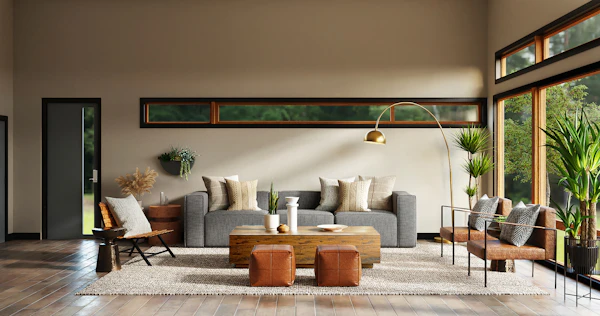
The living room is often the heart of the home. Ambient lighting here should feel welcoming and versatile. Best ideas include layered ceiling lights, warm floor lamps, LED strips behind shelves, and dimmer switches for flexibility. A combination of overhead lighting and indirect light sources creates depth and comfort.
Bedroom Ambient Lighting
Bedrooms need soft and calming lighting to promote relaxation. Popular bedroom ambient lighting ideas include warm bedside lamps, LED strip lights behind headboards, pendant lights with dimmers, and cove lighting. Avoid overly bright white lighting in bedrooms because it can disrupt relaxation and sleep quality.

Kitchen Ambient Lighting
Kitchens need balanced lighting for both function and style. Common ambient kitchen lighting options include recessed ceiling lights, pendant lights above islands, under-cabinet LEDs, and soft overhead illumination. Neutral white lighting often works best in kitchens because it improves visibility.
Bathroom Ambient Lighting
Bathrooms benefit from even lighting that reduces shadows. Modern bathroom ambient lighting ideas include backlit mirrors, ceiling LEDs, soft wall sconces, and waterproof recessed lighting.
Home Office Ambient Lighting
Good lighting improves productivity and reduces eye strain. Ideal office ambient lighting includes adjustable desk lamps, natural daylight, soft overhead lights, and indirect LED lighting.
Trending Ambient Lighting Ideas in 2026
Interior lighting trends continue evolving every year. Here are some of the biggest ambient lighting trends dominating modern homes.
Smart Lighting Systems: Smart lights allow users to control brightness, color, and schedules using smartphones or voice assistants (app control, voice activation, mood presets, color-changing LEDs).
Minimalist Lighting Designs: Simple lighting fixtures with clean lines are trending in contemporary interiors, featuring hidden LEDs, slim pendant lights, neutral colors, and soft diffused lighting.
Biophilic Lighting: Biophilic design focuses on connecting interiors with nature. This includes maximizing natural sunlight and using warm earthy lighting tones.
RGB Ambient Lighting: RGB LED systems have become highly popular for gaming rooms, bedrooms, and entertainment spaces, allowing users to customize colors to match moods or events.
How to Choose the Right Ambient Lighting
Choosing the perfect ambient lighting depends on several factors:
- Room Size: Larger rooms require multiple light sources to distribute illumination evenly.
- Ceiling Height: High ceilings may need chandeliers or pendant lights, while low ceilings work better with flush-mounted fixtures.
- Color Scheme: Warm lighting complements earthy and neutral interiors, while cooler lighting pairs better with modern minimalist spaces.
- Purpose of the Room: Relaxation spaces benefit from softer lighting, while work areas require brighter illumination.
- Energy Efficiency: LED lighting is highly energy-efficient and lasts longer than traditional bulbs.
Benefits of LED Ambient Lighting
LED technology has revolutionized modern lighting design. Major benefits include:
- Lower electricity consumption and utility bills
- Longer lifespan with minimal replacement costs
- Minimal heat production compared to traditional bulbs
- Adjustable brightness and seamless dimming compatibility
- Multiple color options and smart integration
- Eco-friendly and sustainable green performance
Many homeowners now prefer LED ambient lighting because it combines beauty with efficiency.
Common Ambient Lighting Mistakes to Avoid
Even beautiful fixtures can fail if lighting is poorly planned. Avoid these common errors:
-
Using Only One Light Source: Single overhead lights often create flat, harsh, and unbalanced illumination.
-
Choosing Harsh White Bulbs: Cool white lighting can make living spaces feel sterile, cold, and clinical.
-
Ignoring Dimmers: Dimmer switches provide vital flexibility and help create different moods.
-
Poor Fixture Placement: Improper placement may create dark corners, screen glares, or unwanted shadows.
-
Overlighting the Room: Too much brightness reduces comfort and ruins the cozy effect ambient lighting should provide.
How Ambient Lighting Affects Mood & Best Materials
How Ambient Lighting Affects Mood
Lighting has a powerful psychological impact. Warm ambient lighting often creates feelings of comfort, relaxation, warmth, and calmness. Bright cool lighting can increase alertness and focus. Restaurants, hotels, and luxury homes carefully design ambient lighting because it directly influences the emotional experience of the space.
Best Materials and Fixtures for Ambient Lighting
Choosing fixtures that match your furniture and décor style creates a more cohesive interior. Popular choices include glass, brass, wood, matte black, and chrome finishes.
| Material | Style Description |
|---|---|
| Glass | Elegant and modern light diffusion |
| Brass | Luxury, warmth, and classic appeal |
| Wood | Natural, rustic, and cozy aesthetics |
| Matte Black | Contemporary, bold, and dramatic lines |
| Chrome | Minimalist, sleek, and high-tech feel |
Ambient Light Meaning for Small Spaces & Pinterest Interiors
Ambient Light Meaning for Small Spaces
Small rooms benefit greatly from strategic lighting design. Useful tips for compact spaces include using wall-mounted fixtures to save floor space, installing mirrors to reflect light, choosing light-colored walls, adding hidden LED strips, and avoiding bulky chandeliers. Soft indirect lighting makes small spaces feel larger and more open.
Ambient Lighting and Pinterest-Inspired Interiors
Pinterest has heavily influenced modern lighting trends. Many homeowners now prefer aesthetic lighting setups inspired by social media interiors. Popular features include a warm LED glow, neutral color palettes, cozy layered textures, indirect hidden lighting, minimalist furniture, and soft evening ambiance. These setups photograph beautifully and create relaxing home environments.
Aesthetic Styling TipUse mirrors strategically opposite your main ambient light sources (such as a floor lamp or window). This reflects the soft glow across the room, instantly making compact spaces feel double the size and much brighter.
Frequently Asked Questions
What is ambient light in interior design?
Ambient light is the main source of general illumination in a room. It creates overall brightness and sets the mood of the space.
What is the difference between ambient and natural light?
Ambient light can come from both artificial fixtures and natural sunlight. Natural light specifically refers to illumination from the sun.
Are LED lights good for ambient lighting?
Yes, LED lights are excellent for ambient lighting because they are energy-efficient, customizable, and long-lasting.
Which color light is best for ambient lighting?
Warm white light between 2700K and 3000K is generally best for cozy residential interiors.
Can ambient lighting improve mood?
Yes, warm and balanced lighting can create a calming and relaxing atmosphere that positively affects mood.
What rooms need ambient lighting?
Every room requires ambient lighting, including living rooms, bedrooms, kitchens, bathrooms, and offices.
Final Thoughts
Understanding the ambient light meaning is essential for creating beautiful and functional interiors. Ambient lighting forms the foundation of every successful lighting design by providing soft, balanced illumination that enhances comfort and style.
Whether you prefer modern minimalist décor, cozy Pinterest-inspired bedrooms, or luxurious living spaces, the right ambient lighting can completely transform your home. From warm LED strips to elegant chandeliers and smart lighting systems, there are endless ways to personalize your environment.
As home décor trends continue evolving, ambient light meaning remains one of the most powerful tools for shaping atmosphere and improving everyday living. By combining thoughtful fixture placement, warm color temperatures, and layered lighting techniques, you can create a home that feels inviting, stylish, and timeless.