
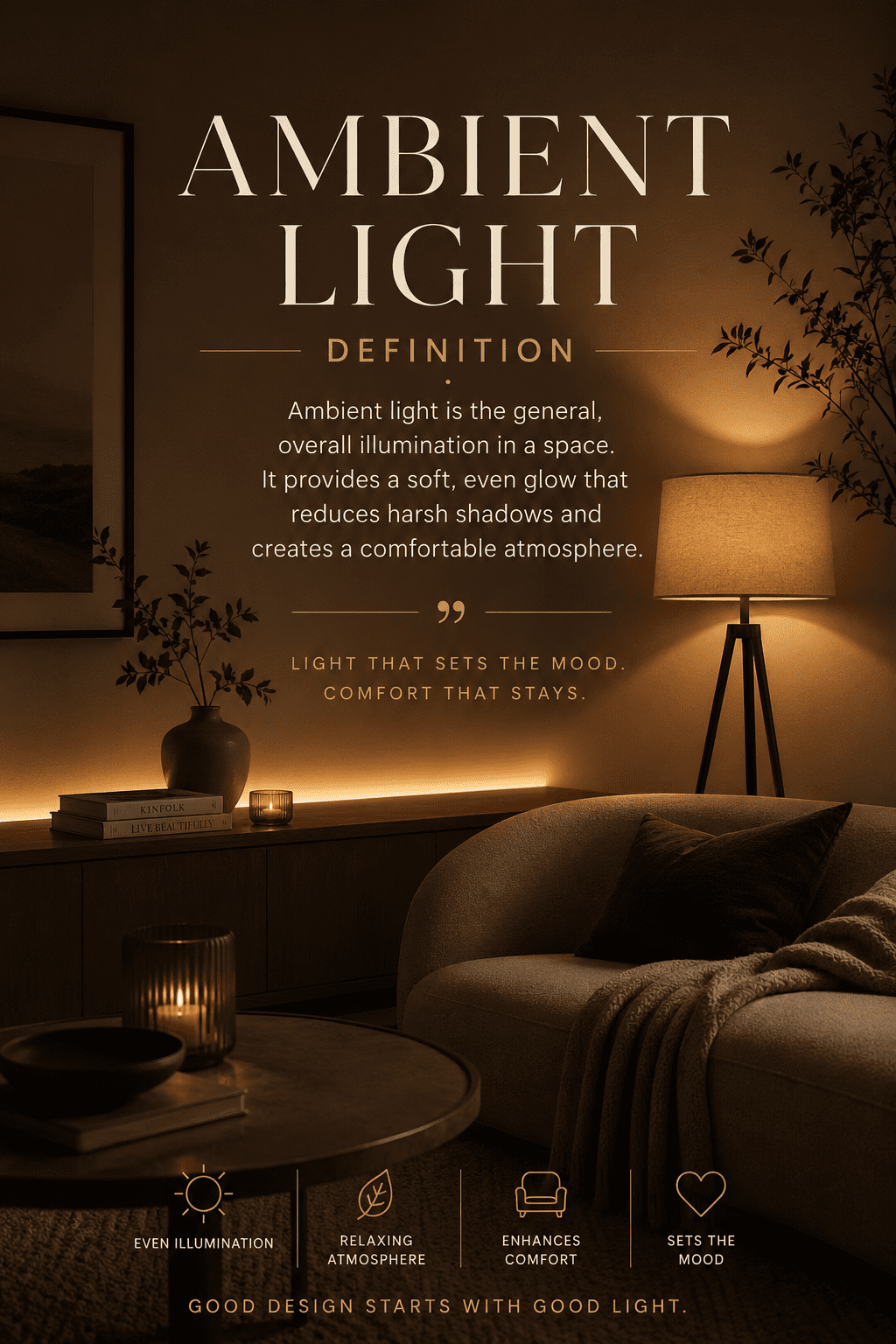
Ambient lighting is one of the most important elements in interior design, yet many homeowners overlook its impact. Whether you want a cozy bedroom, a luxurious living room, or a modern kitchen, understanding the ambient light definition can completely transform your home décor. In today’s design world, ambient lighting is no longer just about visibility—it’s about creating mood, comfort, and aesthetic appeal.
Pinterest-inspired homes often rely heavily on layered lighting techniques, with ambient lighting serving as the foundation. This article explores everything you need to know about ambient light, including its definition, types, benefits, design ideas, and practical tips to elevate your interior environment.
- What Is Ambient Light?
- Why Ambient Lighting Matters in Home Décor
- Benefits of Ambient Lighting
- Pinterest-Inspired Ambient Lighting Ideas
- Types of Ambient Lighting
- Ambient Light for Different Rooms
- Understanding Color Temperature
- Ambient vs Task vs Accent Lighting
- How to Create Perfect Ambient Lighting
- Smart Ambient Lighting Trends
- Best Ambient Lighting Styles for Home Décor
- Common Ambient Lighting Mistakes to Avoid
- Energy Efficiency and Sustainability
- Ambient Lighting for Small Spaces
- How Interior Designers Use Ambient Light
- The Future of Ambient Lighting
- Frequently Asked Questions (FAQs)
What Is Ambient Light?
Ambient light refers to the general illumination in a room that provides overall visibility and comfort. It is the primary source of light that fills a space evenly without creating harsh shadows or glare. In simple terms, ambient lighting creates the base layer of lighting in any interior environment.
Unlike task lighting, which focuses on specific activities such as reading or cooking, ambient lighting spreads soft, diffused illumination throughout the entire room. Key characteristics of ambient lighting include:
Why Ambient Lighting Matters in Home Décor
Lighting influences how a room feels more than almost any other design element. A poorly lit room can feel cold, dull, or cramped, while proper ambient lighting creates warmth, elegance, and coordinates with your furniture textures, wall paint colors, and layouts.
Benefits of Ambient Lighting
A well-planned ambient lighting scheme offers multiple functional and aesthetic benefits for modern living spaces:
- Creates a Comfortable Atmosphere: Soft lighting helps people feel relaxed, making spaces more inviting for guests.
- Improves Room Functionality: Balanced illumination allows people to move and navigate the room safely.
- Enhances Interior Design: Highlights furniture textures, wall colors, artwork, and architectural details.
- Makes Spaces Look Larger: Well-distributed light reduces dark corners, making rooms appear spacious.
- Adds Luxury and Elegance: Layered ambient lighting creates a sophisticated, hotel-like aesthetic.
Pinterest-Inspired Ambient Lighting Ideas
Recreate trending Pinterest design layouts in your home by focusing on cozy lighting: use warm white LED lighting combined with floor lamps and recessed ceiling lights for living rooms, incorporate soft bed-frame under-glows, or highlight kitchen layouts by mixing general ceiling recessed cans with under-cabinet strip lights.
“Ambient light is the canvas of interior design—it defines the boundary, sets the tone, and prepares a room for task and accent highlights.”
Types of Ambient Lighting
Understanding different ambient lighting options helps you choose the right style for your home:
Ceiling-Mounted Fixtures
Ceiling lights are the most common source of general ambient lighting. Flush mount lights, semi-flush mount fixtures, chandeliers, and pendant lights distribute light evenly across the floor plane.
Recessed Lighting
Recessed lighting (also known as can lighting) is installed directly inside the ceiling. It offers a clean, modern, and minimalist appearance while ensuring excellent general illumination.
Wall Sconces
Wall-mounted lighting adds soft ambient illumination while enhancing wall décor. Sconces are perfect for hallways, bedrooms, bathrooms, and living rooms, saving floor space.
LED Strip Lighting
LED strips are extremely popular in modern, tech-integrated interiors. They create indirect ambient lighting when installed behind TVs, bed headboards, floating shelves, mirrors, and cabinetry toe-kicks.
Floor and Table Lamps
Lamps provide flexible, portable ambient lighting while serving as decorative design accessories. Choose arc floor lamps, ceramic table lamps, modern metal designs, or Scandinavian wooden lamps.
Ambient Light for Different Rooms
Every room serves a different purpose and requires a tailored approach to general illumination:

Living Room & Bedroom
Use warm white bulbs (2700K–3000K), combine ceiling lights with floor lamps, install dimmers, and add LED strips behind furniture for living rooms. For bedrooms, install soft bedside table lamps, use hidden LED strip lighting behind the headboard, and avoid harsh overhead lights to support relaxation.


Kitchen, Bathroom & Dining Room
Kitchens benefit from recessed ceiling lights combined with pendant lights over islands and under-cabinet LEDs. In bathrooms, use backlit mirrors, ceiling-mounted LEDs, and wall sconces near vanity mirrors. For dining areas, hang a statement chandelier with a dimmer control to create an elegant, intimate vibe.
Understanding Color Temperature
One of the most important aspects of ambient lighting is color temperature, measured in Kelvin (K). The right temperature sets the mood of your room:
Ambient vs Task vs Accent Lighting
Professional interior designers rely on layered lighting. Review this lighting comparison table to understand the purpose of each light type:
| Lighting Type | Purpose | Example |
|---|---|---|
| Ambient Lighting | General illumination | Ceiling lights, Recessed cans |
| Task Lighting | Focused activities | Desk lamp, Under-cabinet strip |
| Accent Lighting | Decorative emphasis | Spotlight on artwork, Uplights |
How to Create Perfect Ambient Lighting
To design a highly successful and comfortable ambient layout, apply these expert guidelines:
- Start With Natural Light: Maximize daylight using sheer curtains, installing large mirrors, and keeping windows unobstructed.
- Choose LED Bulbs: LED bulbs save energy, last longer, produce very little heat, and offer adjustable color temperatures.
- Add Dimmers: Dimmer switches allow you to adjust brightness depending on the mood, season, and time of day.
- Layer Multiple Light Sources: Avoid relying on one central ceiling fixture. Combine ceiling lights, lamps, LED strips, and sconces.
- Avoid Harsh Shadows: Use diffused light fixtures, choose frosted bulbs, and spread light sources evenly throughout the space.
Smart Ambient Lighting Trends
Modern smart homes are transforming ambient lighting design. Smart systems offer voice control compatibility, mobile app control, adjustable brightness, custom color-changing LEDs, and automated scheduling that coordinates with sunrise and sunset times. Smart brands include Philips Hue, Govee, Nanoleaf, and LIFX.
Best Ambient Lighting Styles for Home Décor
Ambient lighting fixtures contribute to your home’s style just as much as furniture. Select fixtures that coordinate with your aesthetic:
- Scandinavian Style: Minimalist fixtures, warm lighting, natural paper or wood materials, and clean lines.
- Modern Luxury Style: Hidden LED strip channels, crystal chandeliers, recessed lighting, and warm brass or gold accents.
- Industrial Style: Matte black metal fixtures, exposed Edison bulbs, copper hardware, and industrial cage details.
- Bohemian Style: Lantern-style fixtures, warm fairy lights, and woven rattan pendant lamps.
Common Ambient Lighting Mistakes to Avoid
Keep your home lighting functional and inviting by avoiding these common mistakes:
-
Using Only One Light Source: A single centered ceiling fixture creates flat, sterile interiors and harsh shadows. Always layer lighting.
-
Choosing Bulbs That Are Too Bright: Overly bright bulbs wash out room color and make spaces feel cold, clinical, and uncomfortable.
-
Ignoring Color Temperature: Mixing cool white and warm white bulbs inconsistently in the same room creates visual imbalance.
-
Poor Fixture Placement: Improperly positioned fixtures can create dark, neglected corners or uneven, awkward shadows.
Energy Efficiency and Sustainability
Eco-conscious design is a major component of modern lighting. Relying on energy-efficient LEDs reduces carbon footprints and lowers utility bills. LEDs consume significantly less electricity, last up to 25 times longer than traditional incandescent bulbs, and produce very little waste heat.
Ambient Lighting for Small Spaces
Small apartments and compact rooms benefit greatly from thoughtful ambient lighting. Hang large wall mirrors to reflect light, install wall-mounted sconces to save floor space, paint walls in light neutral colors to improve light bounce, and add hidden LED strip channels under cabinets to make the room feel spacious.
How Interior Designers Use Ambient Light
Professional interior designers refer to ambient light as “invisible furniture.” They use it strategically to define a room’s boundary, highlight fabric and wall textures, create visual depth, and improve the architectural flow between rooms. Proper lighting ensures your design looks as good at night as it does during the day.
The Future of Ambient Lighting
The future of ambient design focuses on smart automation, human-centric lighting that mimics natural daylight cycles, sustainable fixture materials, wireless power systems, and integrated architectural LEDs that disappear into ceilings and walls.
Frequently Asked Questions About Ambient Light
What is the definition of ambient light?
Ambient light is the general, primary illumination in a room that provides overall visibility and comfort, acting as the foundational layer of light.
What are examples of ambient lighting?
Examples include ceiling fixtures, chandeliers, recessed can lights, wall sconces, and floor lamps.
Why is ambient lighting important?
It establishes the room’s atmosphere, improves navigation safety, reduces eye strain, and enhances colors and furniture textures.
What color temperature is best for ambient lighting?
Warm white lighting between 2700K and 3000K is best for bedrooms and living rooms. Neutral white works best for kitchens.
Is LED lighting good for ambient lighting?
Yes, LED lighting is highly energy-efficient, long-lasting, and available in multiple color temperatures and dimmable options.
Can ambient lighting improve mood?
Absolutely. Soft, warm ambient lighting supports relaxation, helps reduce stress, and promotes a calming home environment.